
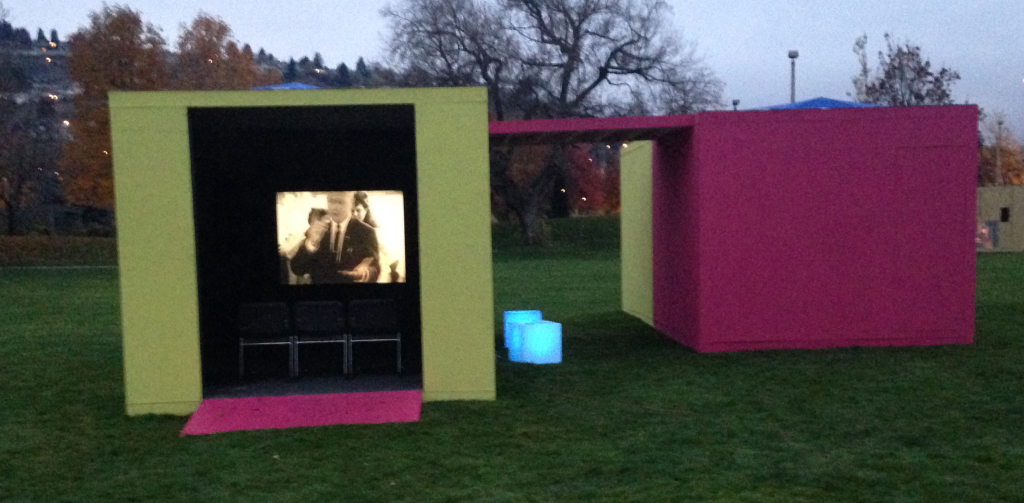
Whether minimal or complex, the installation of artworks in an exhibition setting is integral to contemporary as well as to historical visual arts practice. In this course, students will learn basic principles and skills that are useful in a gallery/exhibition context (informed in this course by primarily Western visual arts traditions and practices). towards the spatial planning of exhibitions, the installation of artworks in exhibition settings, and the preparation of artworks for display and shipping. These are skills common to the preparatory staff at galleries or museums, and ones that are of practical relevance for any professional artist. Regardless of the degree of hands-on involvement that an artist has in the handling of their own work, a knowledge of such skills as these proves invaluable in discussing exhibitions of one’s work with curators and galleries’ technical staff. Projects in this course will sample from such interests as the presentation of two-dimensional artworks, such as drawings and paintings, as well as three dimensional and/or other experimental works such as sculpture and installation. The student will learn such specific skills as: mat-cutting and framing, the crating of artworks, workshop skills common to exhibition installation, the mapping of gallery spaces in the form of two-dimensional plans; etc. A combination of the student’s own artistic works and current exhibition programming will be used as a basis for course projects.
- Teacher: Lawrence Donald